

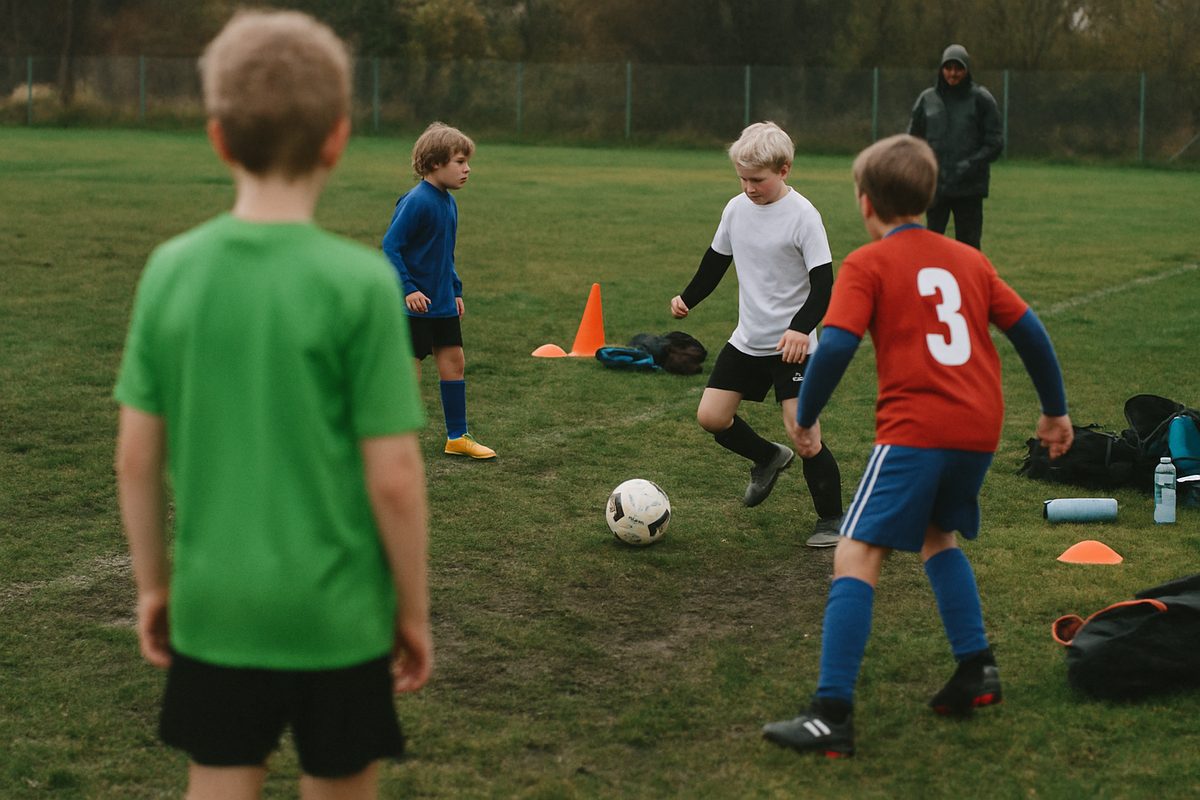
NFF Youth Football: Rules and guidelines coaches must know
The Norwegian Football Association has clear guidelines for youth football that ensure proper development. Here are the most important rules for playing time, match formats and training content that apply from ages 6 to 12.
Age-specific match formats
The NFF has established which match formats apply to each age group. Ages 6-7 play 3v3 without a goalkeeper, 8-9 year olds play 5v5 with a goalkeeper, 10-12 year olds play 7v7, and from age 13 they play 11v11. These formats are not arbitrary – they ensure children get many ball touches and are actively involved in the game.
A coach of a 9-year-old team cannot choose to play 7v7 because "it's better training". The format is determined, and the reason is that younger players need more passes, shots and decisions per match. In 11v11, a 9-year-old can stand still for ten minutes. In 5v5, the same player gets the ball every minute.
Playing time for everyone
The NFF states that all players in youth football matches should get approximately equal playing time. This applies up to age 12. "Approximately equal" does not necessarily mean exactly the same number of minutes, but no one should sit on the bench for most of the match while others play nearly the entire game.
In practice: if the match has four periods of twelve minutes each, every player must get at least half of the match's total time. A player who only gets the last twelve minutes when the match is already decided does not get equal playing time. Plan the substitutions before the match starts – write down who plays which periods. Several coaches use MyTeams to create a substitution plan in advance, so they don't have to think about it during the match.
No league tables before age 11
Up to and including age 10, league tables or official results should not be kept. Matches are played, but points are not counted and winners are not publicly declared. This is a deliberate rule to reduce performance pressure early on.
What do you do when a parent asks "how many points do we have"? Explain that the focus up to age 11 is learning, not winning: "We're practicing playing the ball backwards under pressure, and today the players managed that five times. That's the progress we measure." Eight-year-olds don't remember last year's table anyway – they remember whether they got to participate, whether they scored, whether they learned something.
Training content adapted to age
The NFF recommends play-based football for the youngest. Ages 6-9 should have lots of play, small games, and varied movements – not rigid tactical exercises. A common mistake is training 8-year-olds in formation: "you stand here, you run there when he gets the ball". Children at this age cannot see the whole pitch and remember positions – they just want the ball.
From age 10 you can gradually introduce more structure, but still with the main focus on technical skills in game situations. Imagine a training session where you spend 45 minutes explaining running patterns, versus one where the players actually get to shoot and pass for 45 minutes. The second one produces development.
What the rules mean in everyday life
When two players fight over the captain's armband and you must choose: rotate who is captain each match, or remove the armband entirely. NFF guidelines are about inclusion, and fixed captain's armbands create hierarchy you don't need.
When your team faces a team that clearly doesn't follow the playing time rule – their best five play the entire match – raise it with the district association after the match, not with the opposing coach then and there. Your responsibility is your own players, and they must see that you follow the rules regardless of what others do.
Parent expectations
Most conflicts with parents stem from misunderstood expectations about the purpose of youth football. When a parent believes their child deserves more playing time because "he's better than that one there", refer directly to NFF rules: "Everyone gets equal playing time up to age 13. It's in the football association's guidelines, and it's not something I decide – it's the framework we all follow."
If parents complain about lack of results, point out what the NFF actually measures success by in youth football: enjoyment, learning, breadth. Ask: "Does your child think it's fun? Is your child learning something new? Then we're doing our job."

