

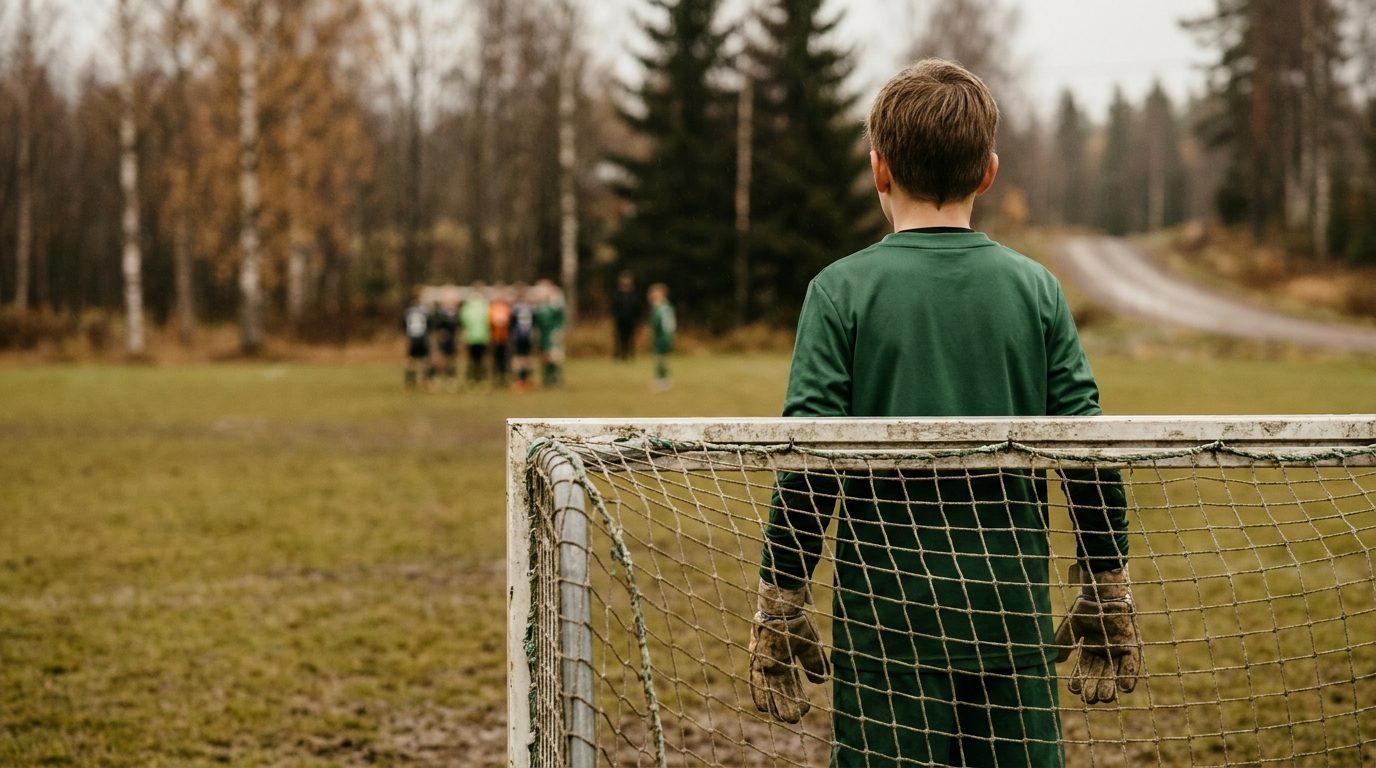
The goalkeeper role in children's football: everyone tries, nobody gets stuck
Goalkeeper is the position nobody volunteers for, and the one most likely to ruin a match day for a child. Here is how to rotate the role fairly, train it without a keeper coach, and say the right thing after a goal goes in.
The position nobody volunteers for
It usually goes like this: the coach asks who wants to play in goal, the circle goes quiet, and eventually the kindest kid on the team says yes just to end the silence. Then they stand there for forty-five minutes, concede five goals, and go home feeling like they let everyone down.
That is a sad start for the most distinctive position on the pitch. The keeper is the only player allowed to use their hands, the only one who sees the whole team in front of them, and the only one who gets blamed alone. If we treat the role as a punishment, it becomes one.
Everyone tries it — but nobody gets ambushed
The Norwegian FA is clear: in children's football every player should try every position, including goalkeeper. It is about fairness, but also about development — keeping goal trains reaction, courage, footwork and spatial awareness that players carry back out onto the pitch.
What breaks the principle is not the rotation itself, but the way it arrives. Being asked two minutes before kick-off is a completely different experience from knowing in advance.
How to make it safe:
- Say it at the training session before the match. "On Saturday you're in goal for the first half, Emma. Let's practise a bit today."
- Never more than one half. Two halves in a row is a very long time for an eight-year-old.
- Let the keeper play outfield afterwards. The role should never cost anyone playing time on the pitch.
- Keep a fixed rotation. When everyone knows their turn comes and goes, the negotiating stops.
And if you have a child who is genuinely afraid of the ball? Don't push. Build it up instead: five minutes in goal at training, soft ball, short distances, until it feels fine.
Goalkeeper training without a goalkeeper coach
Most youth teams have no keeper coach, and they don't need one. Ten minutes during the warm-up goes a long way, and the rest of the squad can join in.
Four things that pay off most:
- The grip. Hands forming a W behind the ball on high shots; little fingers together and arms low for anything along the ground. Throw calm balls and let them feel the difference.
- Feet first. Young keepers dive far too early. Practise small, quick sideways steps before the hands come up — most shots can be saved standing.
- The fall. On grass, without a ball to begin with: sit down, lie down on your side, get back up. Then with a ball rolled towards them. Nothing removes fear faster.
- The first pass. The keeper starts the attack. Practise a calm throw to the nearest teammate rather than booting it as far as possible.
Finish with something simple: a small goal at each end, the keeper in goal, players shooting in pairs from close range. Kids love it, and the keeper gets a hundred repetitions in ten minutes.
What you say after a goal goes in
This is the moment that decides whether the child ever wants to play in goal again.
Don't say "never mind" and look away. Don't analyse the mistake on the spot. Say something concrete and forward-looking: "Good positioning — that ball took a deflection nobody saves. Next time stand half a step further forward." Then a high five, and move on to something else.
Use the good moments actively too. A keeper who picks up a loose ball in the box has done something right, even if it doesn't look spectacular. Praise it, loudly enough for the team to hear.
The practical stuff
- Gloves in the team bag, ideally two pairs in different sizes. Buying your own is expensive for many families, and a keeper without grip drops the ball.
- A dedicated keeper shirt that everyone wears makes the role something you put on, not something that happens to you.
- Talk to the parents in advance. When everyone knows the rotation is the team's plan, the keeper is spared sideline comments about conceded goals.
Keep track without counting in your head
The hard part about keeper rotation isn't the principle — it's remembering who went last while you're also counting playing time, making substitutions and hunting for water bottles. After a couple of matches there is always someone who has played in goal three times and someone who never has.
In MyTeams you can see playing time and positions from earlier matches while you set up the next one, so the goalkeeper rotation runs as smoothly as everything else. One less thing to hold in your head on a cold Saturday in October.

